 Loong Wang

Six months ago, to the day, I was introduced to Jack Zhang through a mutual friend and investor.
“Keen to chat with Jack? No idea where it will go, but should be a fun one at minimum.”
Two fellow Aussies, Melbournites, unicorn founders, snowboarders, and most importantly: coffee lovers. Jack runs Airwallex, a fast-growing decacorn company building intelligent financial platforms for global businesses. And I myself have been a builder in the space, founding a unicorn company that pioneered decentralised inter-blockchain liquidity.
Our friend was right and wrong: we had a lot to chat about, but we also knew exactly where it was going from the start. We immediately started discussing the need for a new kind of financial infrastructure. Something global, neutral, and ready for institutions. Something that could serve the next era of finance: agents, stablecoins, and tokenized financial products.
It began taking shape and, before long, I was introduced to Catherine Porter. Catherine has long been obsessed with the opportunities of blockchain infrastructure for transforming finance, and led partnerships for the Libra project. She is a truly global executive with an amazing track record, and a reputation that speaks for itself. We quickly joined forces as cofounders.
We believe that the world needs full stack infrastructure that is built for tokenized financial products and services of all kinds, with institutional-grade privacy and compliance, native support for agents, identity, and authorization, and global on/off ramps for as many countries and currencies as possible.
And so today, we are introducing Alta: the foundational infrastructure for tokenized financial products. Institutional, agentic, and liquid.
We are also proud to announce that Airwallex and Capital49 have co-led a seed investment into Alta, with Airwallex joining as our first design partner.
The world needs better rails. Our mission is to build it. And the time to build it is now.
Stablecoins
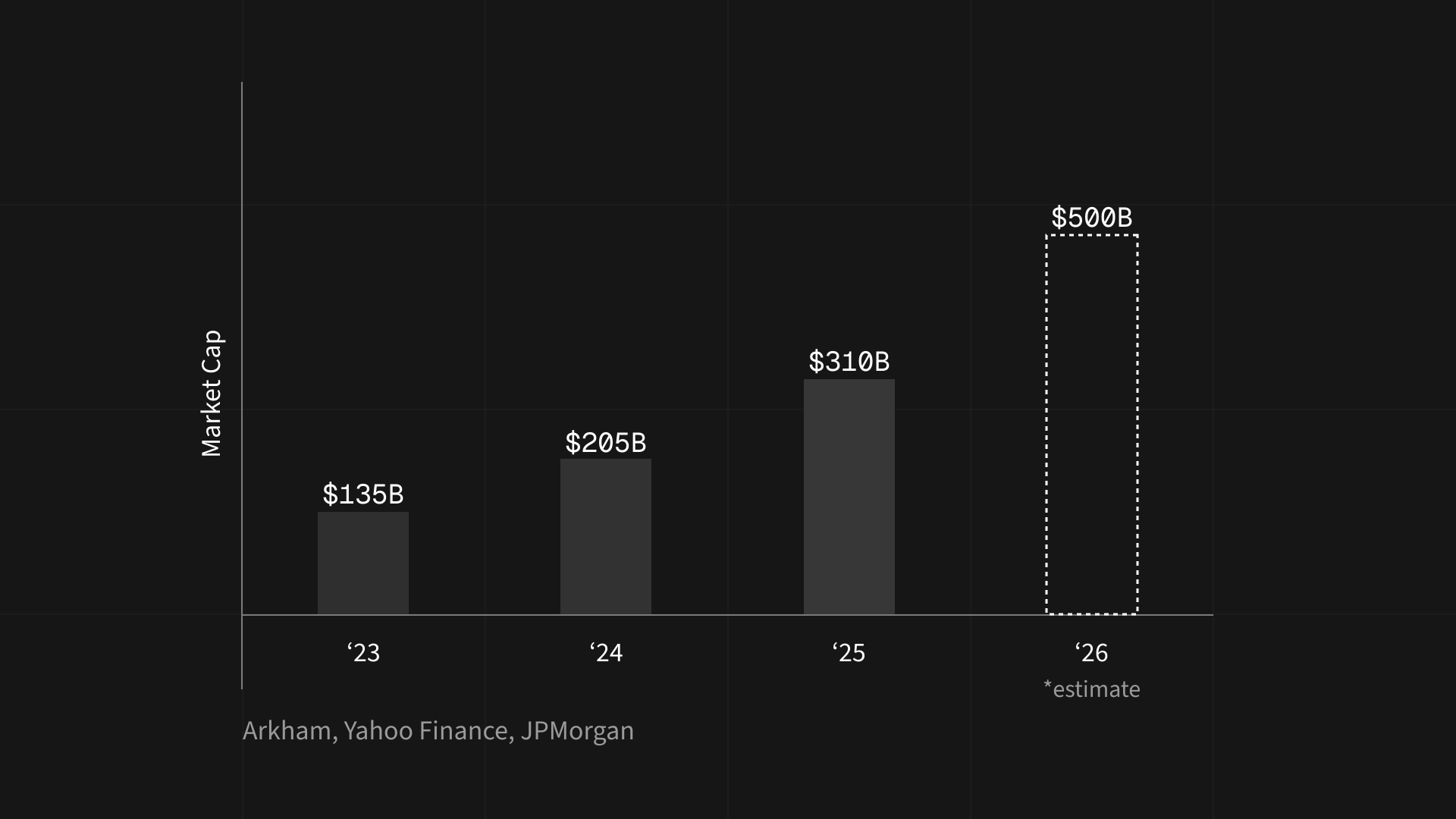
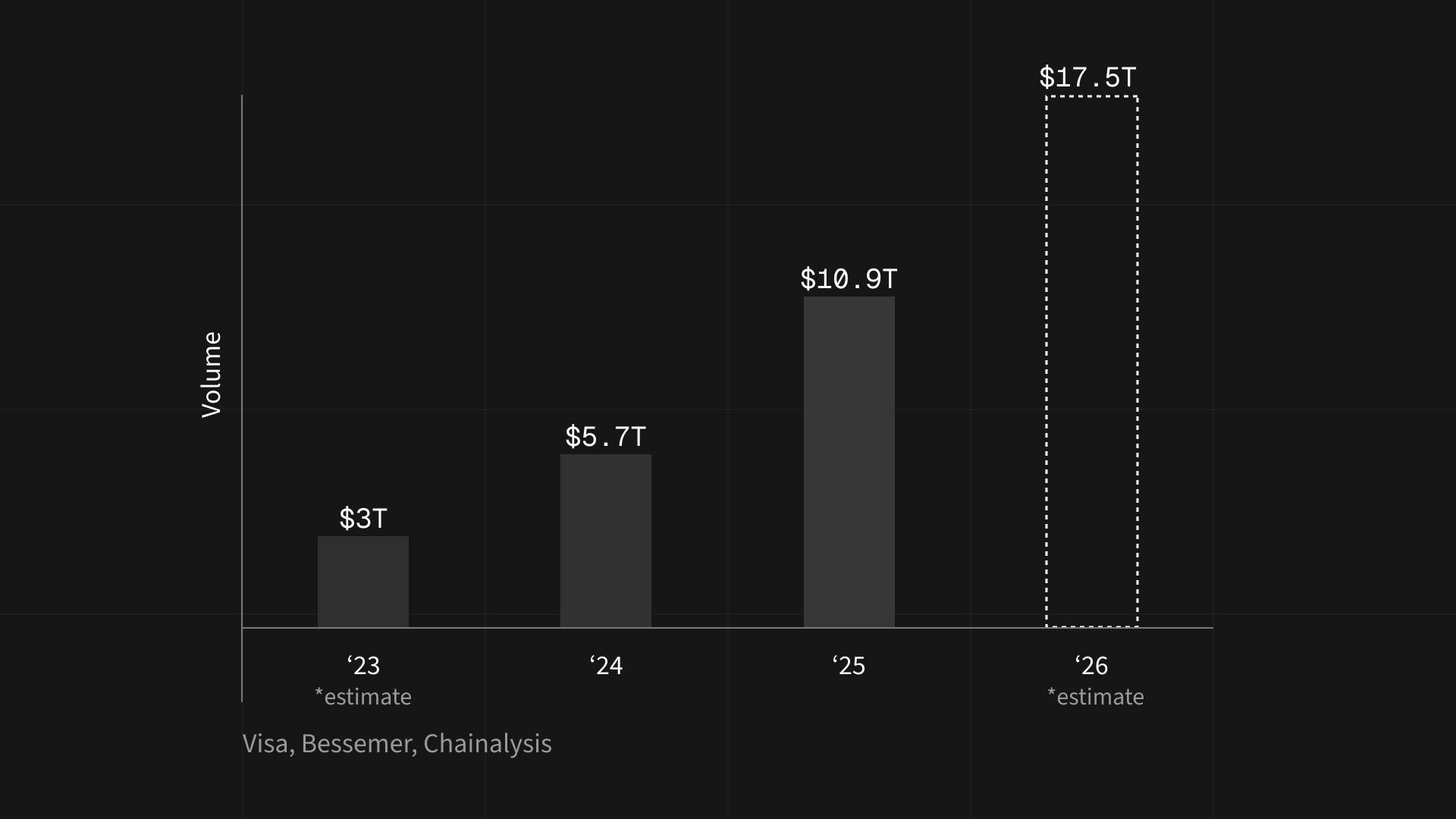
Over the last few years, stablecoins have been growing at approximately 100% year-over-year. It is expected that by the end of this year there will be ~$500B of stablecoins in circulation, driving ~$17.5T in transaction volume.
Why do people care about stablecoins?
Because stablecoins allow parties to move dollars cheaply, instantly, and globally. Compare that to traditional settlement networks, like the nostro/vostro correspondent banking system, where it can take days to move money. By my estimate, there is approximately $1.5T worth of USD inflight on any given day. That’s $56B in lost interest every year, assuming the risk-free rate. And this is just dollars. We haven’t even considered other currencies, financial instruments, or the broader efficiency wins that come with instant programmable cross-border settlement.
It’s no wonder that stablecoins are having their day in the sun.
Tokenization, tokenization everywhere
But there is a lot more to financial infrastructure than moving dollars. There are bank deposits, equities, T-bills, money market funds, securities. The list goes on.
Today, it is estimated that 60% of stablecoin volume is driven by B2B settlements. But in the non-tokenized world, the notional value moved in B2B settlement is 200x that of consumers. This is because notional value includes assets that aren’t literal dollars. Stablecoins cannot represent these assets.
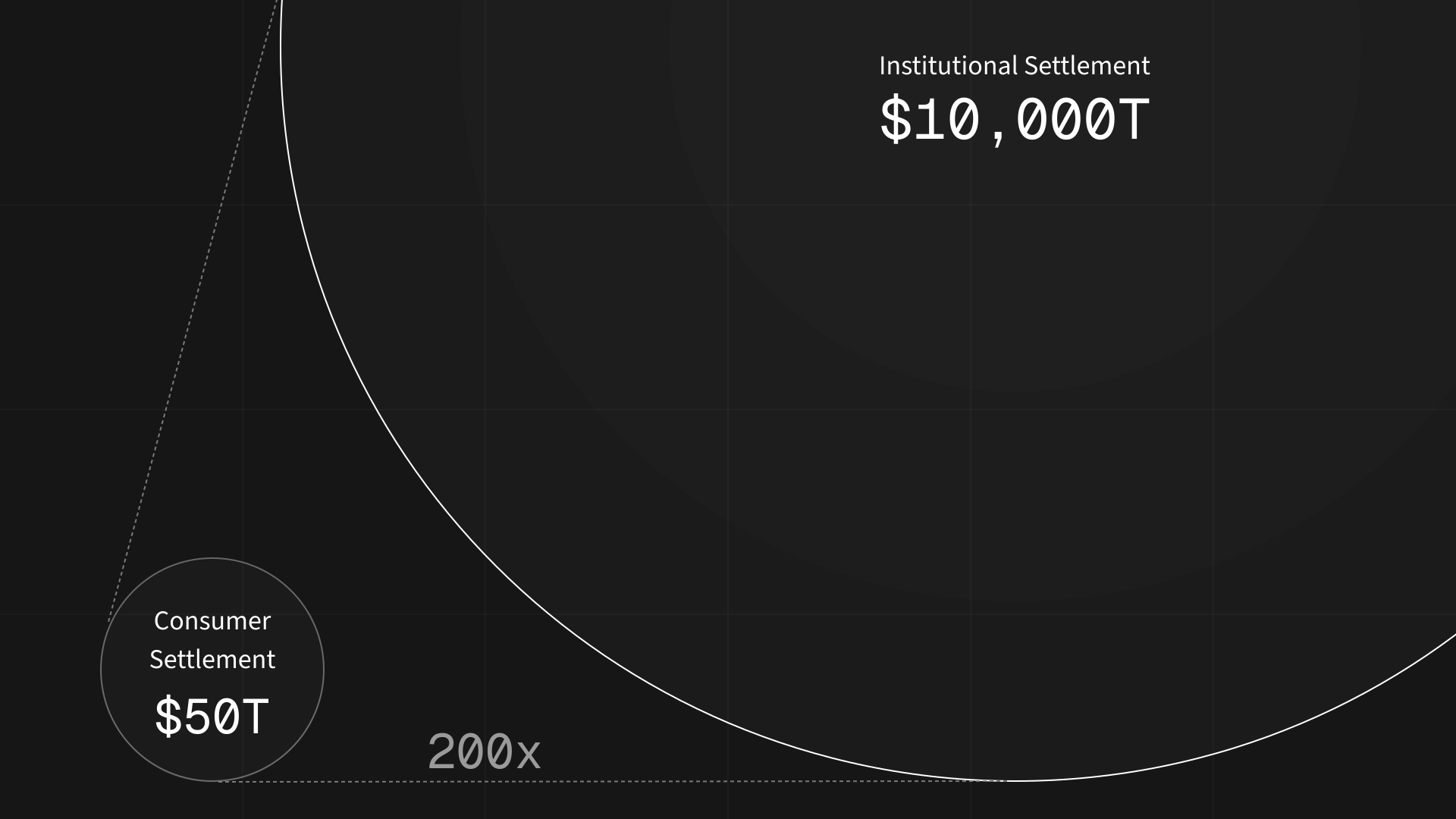
The only way to support this $10,000,000,000,000,000 of annual volume is to go beyond stablecoins and provide institutional-grade infrastructure for tokenized financial products of all kinds. And we are already starting to see the signs. At the end of 2025, BlackRock released an experimental tokenized money market called BUIDL (only for institutions). At the beginning of 2026, HSBC announced a successful pilot for tokenized bank deposits. Financial institutions the world over are not just sitting up and paying attention. They’re leaning in. And the more regulators provide clarity, the harder they lean.
Alta is building a full stack of institutional-grade tokenized financial products. Capturing not just stablecoins, but also whatever comes next.
Comply, or die
But there’s an unsolved problem when it comes to building institutional-grade tokenized financial products: compliance and privacy.
Today, there are no chains that take this problem seriously. At most, they allow stablecoin issuers to block sanctioned addresses from transacting. Apparently that’s the bar: don’t let terrorists and international criminals move money. I’m all for that, but compliance is significantly more complex.
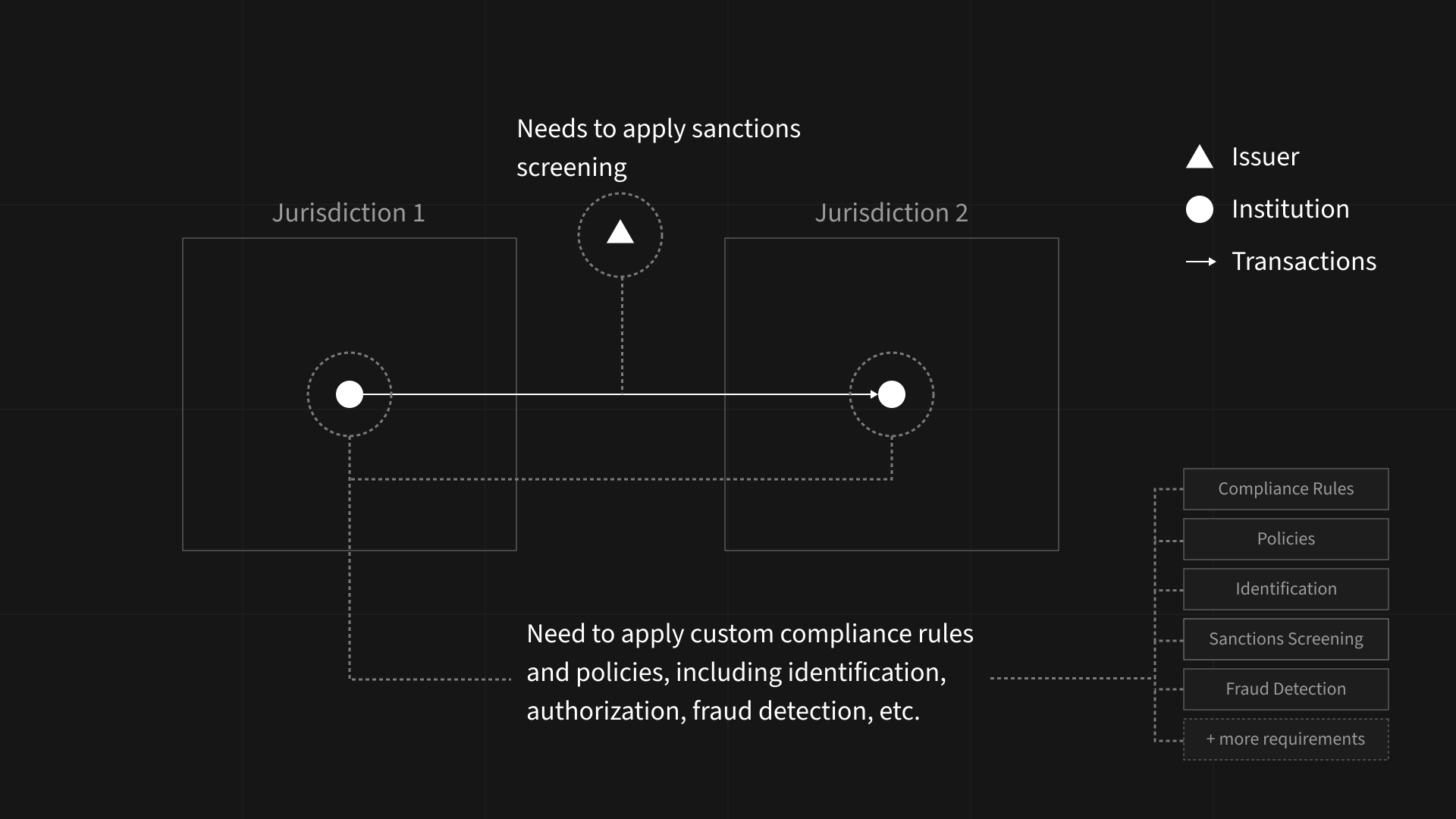
There are many more rules than plain-old sanctions screening. Especially when you expand beyond stablecoins. Every jurisdiction has its own rules. Every asset class has its own restrictions. Every institution has its own internal policies. A lot of the time, when funds don’t settle instantly, it actually has nothing to do with the settlement rails, and has everything to do with the AML and fraud detection policies of the beneficiary’s institution. Stablecoins alone do not solve these delays.
An ideal chain would allow regulators and institutions to define their own custom rules and policies, and then instantly enforce them onchain as part of settlement. But if compliance is onchain, with the entire network processing your policy logic, how can you ensure privacy?
Most chains solve this problem poorly, if at all. The all-too-common “solution” is to create disconnected subnets/zones that are run by a restricted group of operators. Inside the subnet, things are private. Except for one glaring hole: the operators can see everything. And when assets move between subnets, everyone can see everything.
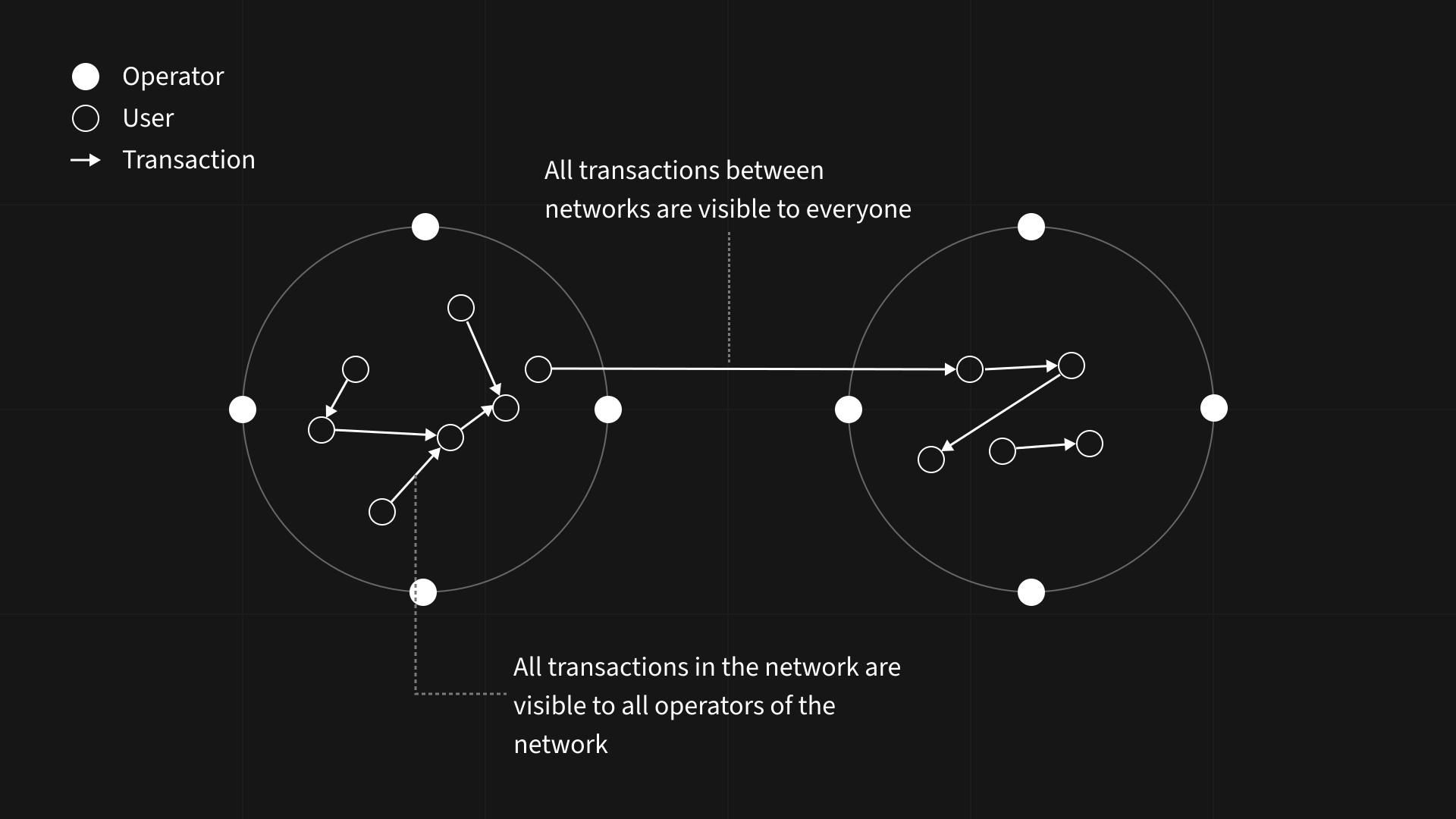
This creates an unresolveable tension. You want as few operators in a subnet as possible — to avoid having too many operators that can see everything that’s happening. But you also want as many operators in a subnet as possible — to avoid having to transfer funds between subnets, thereby revealing everything that’s happening.
Alta will achieve institutional-grade compliance and privacy with new primitives for identity, authorization, attestation, transaction controls, account controls, programmable policies, and advanced cryptography, built directly into the chain.
Not-so-secret agents
If you believe that agents are on the rise — which is hardly a controversial take — then it is only a matter of time before agents begin overseeing consumer commerce and institutional financial operations: managing treasuries, operational accounts, suppliers, procurement, revenue operations, foreign-exchange, and more.
Estimates of consumer-driven ecommerce range from $1.5T to $5T in annual agent-driven transactions by 2030. Any serious settlement network for the future needs first-class support for agents.
Agents need extremely low transaction fees. A single API call needs to cost a cent or less. Slapping on 30¢ + 2.9% in transaction fees simply will not work. And if everyone is agentmaxxing, there are going to be a lot of these transactions. So settlement rails need to handle a massive number of tiny cheap transactions. Millions per second. The transactions also need to be instant, otherwise agents lose their main advantage: speed and autonomy. Agents also need payment methods that are cross-border and cross-currency. Otherwise, if you are based in Europe and want your agent to access tools deployed by American companies, you’re out of luck.
Agents need settlement rails that are instant, cheap, cross-border, and available 24/7/365.
Agents and tokenized assets are a perfect match.
And to support them natively, Alta is building agentic primitives for everything from identification and authorization to payment requests and agent-to-agent interactions.
The spice must flow
New settlement rails cannot exist in a vacuum. At some point, consumers and institutions need a way to turn their tokenized assets into real fiat.
For stablecoins, this isn’t a theoretical problem. The value of a stablecoin is predicated on the ability to pay-in dollars and mint fresh stablecoins of an equal amount, or to burn stablecoins and receive a pay-out of an equal number of dollars.
Today, no chain offers global and scalable on/off ramps.
The problem gets worse when you consider that – according to Goldman Sachs – over 66% of USD stablecoin holders are individuals in emerging markets. Their local currency is not USD. So on top of solving for local on/off ramps, you have to solve for FX. There’s around 200 countries (depending on who’s counting) and approximately half as many actively used currencies (although many countries consider multiple currencies legal tender, so you can get good coverage by supporting less than half of the actively used currencies).
Building the necessary network of licenses, payment method integrations, money pools, and FX partnerships is no mean feat.
Airwallex is arguably closer than anyone. By partnering with them, the Alta infrastructure will have access to the best global network of local payment rails of any L1 chain: supporting 200 countries and 90 currencies.
Full speed ahead
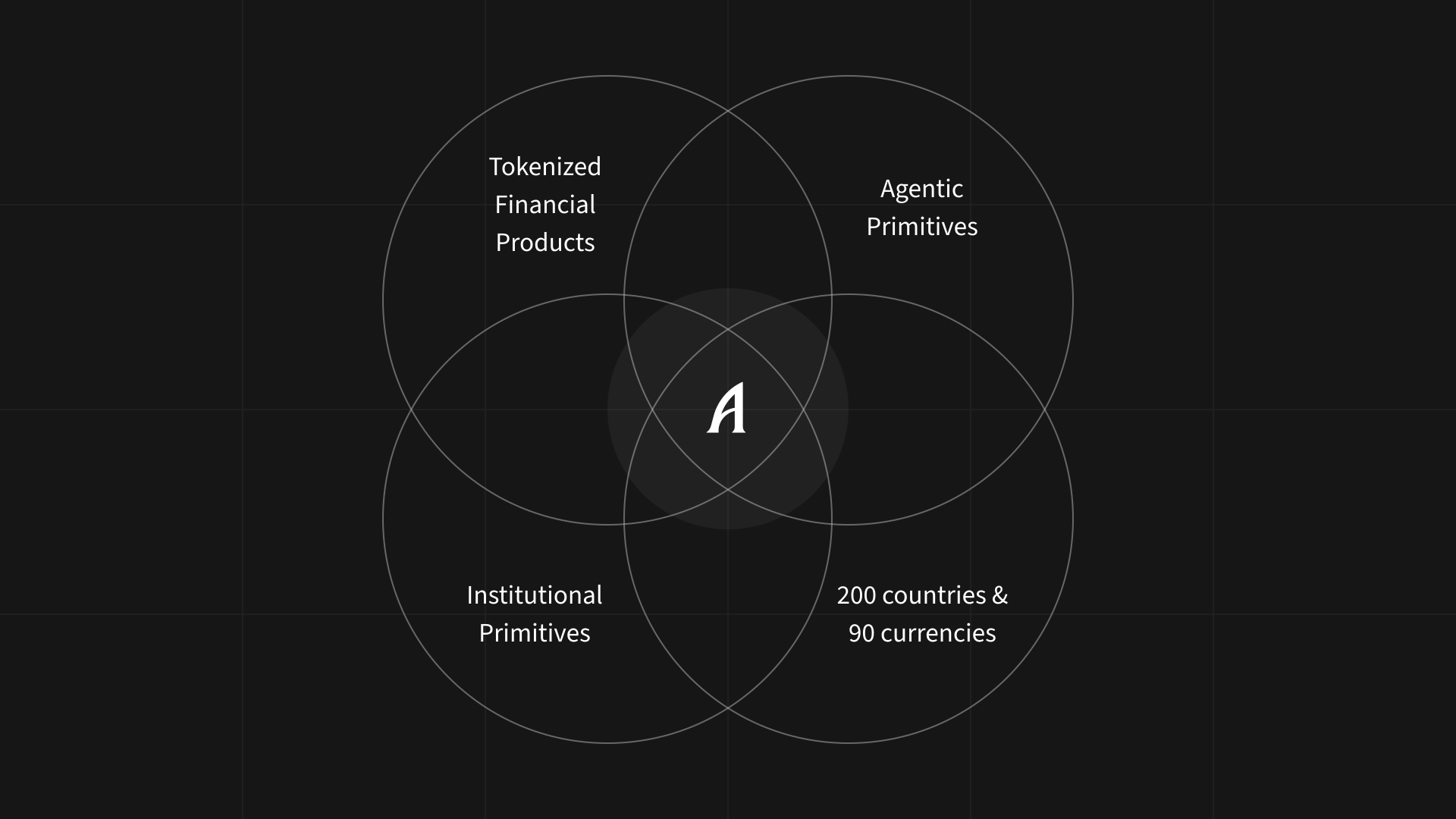
Our mission is to build a full stack infrastructure for tokenized products and services, agentic commerce, and financial operations, with institutional-grade compliance and privacy, and global on/off ramps.
Join us, and build on Alta: alta.finance.